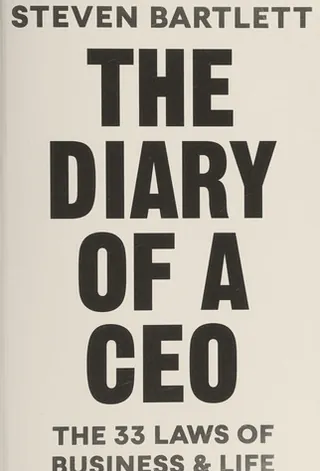
A really really well written book, which takes 33 theories from startup/founder/management/marketing etc and condenses them into one read. Yes it could be a blog, but it is very useful nonetheless. Start at number 10, the first 9 are rubbish.
- Understand your professional potential is made up of 5 elements
- Knowledge, What you know
- Skills, What you can do
- Network, Who you know
- Resources, What you have
- Reputation, What the world thinks of you
Fill these in this order, and remember the first 2 can never be taken from you, the last 3 can.
- Skin in the game
- Have monetary of social capital at stake to force yourself to succeed
- Don’t disagree
- Don’t start a sentence with “I disagree , or You’re Wrong”. Instead, say what you have in common.
- You don’t get to choose what you believe
- Lean in to unknowns.
- don’t run from ideas that make you uncomfortable
- Ask questions
- ‘Will you recycle?’ not ‘please recycle’
- Have a positive self-story, and never compromise
- the most convincing sign that someone will achieve new results in the future, is new behaviour in the present
- Habit
- cue → routine → reward
- instead of ‘stop alcohol’ , say ‘every 2nd beer is a tea’
- Health
- there is no greater form of gratitude than taking care of yourself
- Useless absurdity
- most absurd thing about you says everything about you
- eg big blue slide + ball pit in the office. having 100ft climbing wall in the gym
- Don’t be wallpaper
- overusing popular phrases/CTA’s to the point the brain habituates to them + tunes them out
- great marketing is uncomfortable - it springs a dormant brain into a neurological frenzy
- Piss people off
- make people feel something either way. indifference is the dead zone. “piss of 80%, turn on 20%”
- Psychological moonshots - cheaper, easier + more effective to invest in perception than reality.
- “peak end rules”, customers judge entire experience on 1) peak and 2) end
- idleness aversion - why Uber show moving map while you wait. Chrome trex game
- uncertainty anxiety - ‘delayed’ vs ‘delayed by 20mins’
- operational transparency - Uber vs black cab/minicab pricing
- goal gradient effect - we work faster the closer we are to a goal. other examples, japan trains - cleaning staff do a ritual + wear bright outfits at each stop.
- lift close buttons - don’t do anything, they give us the illusion of control, decrease uncertainty, make you feel safer.
- soap makers - add menthol to give smell,
- Mcdonalds - touch screen add interactivity, remove embarrassing long orders, psychological safety.
- Friction can create value - comparison websites increase search times + convince you they’ve done a thorough search
- The frame matters more than the picture
- vegan leather vs plastic, 90% lean vs 10% fat, partnership vs sales team, WHOOP not having a clock
- Goldilocks effect
- context creates the value
- Endowment effect - Apple Store, try before you buy
- Win the first 5 seconds
- with storytelling, cater to your most uninterested customer first
- Sweat the small stuff
- Kaizen - continuous improvement, 1% per day
- Set target of 1 idea/month per employee
- Small miss now = big miss later
- Pursuit of perfection is a master of discipline not heroism
- Outfail your competition as quickly as possible
- Type 1 irreversible vs Type 2 reversible decisions
- promote failure
- remove bureaucracy, allow freedom for Type 2 decisions
- fix the incentives
- promote those who fail, fire those who block ideas
- measure accurately
- share failures for learnings
- Don’t have a Plan B.
- There’s no greater force of creativity, determination + commitment than a person undistracted by a Plan B.
- Avoiding uncomfortable realities + difficult conversations is unhelpful - get to truth asap
- “pressure is a privilege”
Dealing with pressure:
- see it, speak it, embrace it, do not ignore it
- share it with loved ones
- frame it - recognise the positive role it plays
- use it - the increased alertness, focus, energy
- Ask “Why will this idea fail?”
- Why we don’t? Optimism bias, confirmation bias, self-serving bias, sunk-cost fallacy
- The market you sell your skills into matters more than the skills themselves
- Embrace mortality
- our time + how we allocate it will determine if you succeed or fail
- “we don’t have to be smarter than the rest, we need to be more disciplined than the rest”
- Who not how - what the best founders do
- Build a cult
- sense of belonging
- shared mission
- inspirational leader
- Us vs Them mentality
- Fire quickly, hire to raise the bar
- People want a feeling of progression, and if we aim for perfection, we’ll fail, because perfection is so for away eg. ask every team head for weekly updates to the company
- Be an inconsistent leader - know everything about your team so you can tailor your management style to each team member.