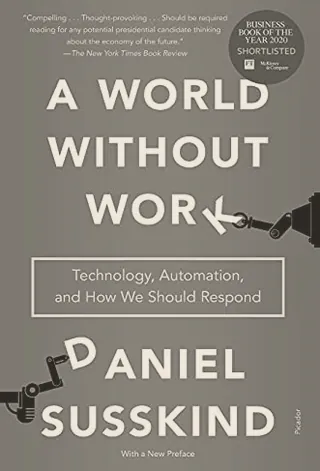
- Before industrial revolution, Queen Elizabeth I shut down innovation
- 1800’s, ‘luddites’ targeted entrepreneurs looking to automate work
- Hours worked/year has decreased
- Innovation either 1) substitutes , or 2) complements
- complements means 1) productivity, 2) bigger pie effect, 3) changing pie effect
- ALM hypothesis;
- look at labour market in terms of ‘tasks’ not jobs
- rather than skill-level, look if the task if ‘routine’ or not
- 3 types of work;
- Manual - assembly line is easiest to automate
- Cognitive - legal contracts etc
- Affective - stuff which requires feelings + emotions
- Superiority assumption - in the past we’ve assumed robots will take low level work and humans will then slot into the superior work, this won’t always be true.
- Education
- WHAT: stop teaching routine tasks, instead teach Comp Science/Applied Maths
- HOW: tailored tuition, or MOOC’s
- WHEN: constant reeducation to retrain in skills we don’t yet know about
- Taxation
- of workers, is less important, as labor:capital decreases
- of robots, that replaces workers is v v difficult
- of capital, is v difficult in practise
- of business, more needs to be done here.
- UBI - should be for all to avoid stigma, claimants should be required to make either an economic (work) or non-economic (community care) contribution.
- Capital sharing, 1) reduces the need to income sharing, 2) narrows economic divisons
←The bookcase
One of the books Shaun rated five out of five.